How to Ace a Job Interview: 7 Conversation Tips That Actually Work
Published June 23, 2026 · 7 min read · Updated July 5, 2026

Talkingskill.com administration
The team behind the conversation scenarios and the six-skill communication test.

A job interview is really just a high-stakes conversation. The people across the table want to know whether they'd enjoy working with you and whether you can do the job — and almost everything they learn comes from how you talk, not from your CV. That is good news, because conversation is a skill you can practise. Below are seven tips that turn a nerve-wracking interview into a conversation you can actually steer.
1. Treat the interview as a two-way conversation
The biggest mindset shift is to stop seeing the interview as an interrogation. A good interviewer is hoping for a relaxed back-and-forth, not a recital. When you answer a question, finish with a short hook that invites a follow-up — "…and that is the part of the role I would love to hear more about." You will feel the interview loosen up almost immediately.

2. Prepare stories, not scripts
Memorised answers sound robotic the moment an interviewer goes off-script. Instead, prepare five or six short stories about real situations and outcomes. In the interview you simply pick the story that fits the question you are asked. This is exactly the kind of thing worth rehearsing out loud before the interview, not just replaying in your head.

3. Use the STAR shape for tricky questions
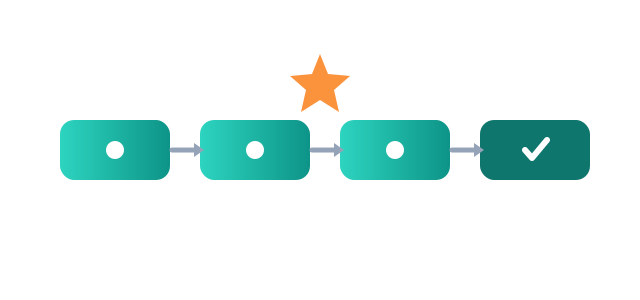
When an interviewer asks "Tell me about a time…", structure your answer as Situation, Task, Action, Result. It keeps you from rambling and makes your impact obvious. Practise compressing each interview story into about ninety seconds — long enough to show depth, short enough to keep the conversation moving.
4. Talk about yourself without bragging or shrinking
"Tell me about yourself" sinks a lot of interviews. Do not recite your life story, and do not downplay everything either. Give a three-part answer: who you are now, one concrete proof point, and why this role is the natural next step. Confident, specific and short — that is what an interviewer remembers after a long day of interviews.
5. Handle the question you are dreading
Every interview has one: the gap on your CV, the weakness question, the salary question. Decide your honest, brief answer in advance so it cannot ambush you. A calm, prepared reply to a hard interview question often impresses an interviewer more than a flawless record does.
6. Ask questions that show you are already in the role
When the interviewer says "Do you have any questions?", the worst possible answer is "No." Ask one or two questions that assume you are picturing the work: "What would a strong first ninety days look like?" Thoughtful questions turn the final minutes of the interview into a genuine conversation between future colleagues.

7. Rehearse out loud before the real thing
You would not perform on stage without a rehearsal, yet most people walk into a job interview having only thought about their answers. Saying the words out loud — ideally in a back-and-forth where the questions come at you — is what builds fluency under pressure. That is the whole idea behind practising an interview as an interactive roleplay: you get the reps in before they count.

The fastest way to get better at interviews
Reading tips is a good start, but interviews reward the people who have actually had the conversation a few times. Run through a simulated job interview, make your choices, and watch how each answer shifts the interviewer's interest. Do it three or four times and the real interview will feel familiar instead of frightening.
Related reading
Rehearse a real job interview now
Reading helps; doing sticks. Step into an interactive interview roleplay, choose your answers, and watch exactly how each one lands.
Practise interview answers